The one difference that matters
Every other green tea is an infusion. You put leaf in water, take the leaf out, and drink what dissolved. Matcha is the leaf. It is ground fine enough to suspend in water, and you swallow all of it.
That single fact explains most of what follows — the colour, the caffeine, the price, and why a bad matcha is so much worse than a bad sencha. There is nothing to hide behind. Whatever is in the powder ends up in you.
How it is made
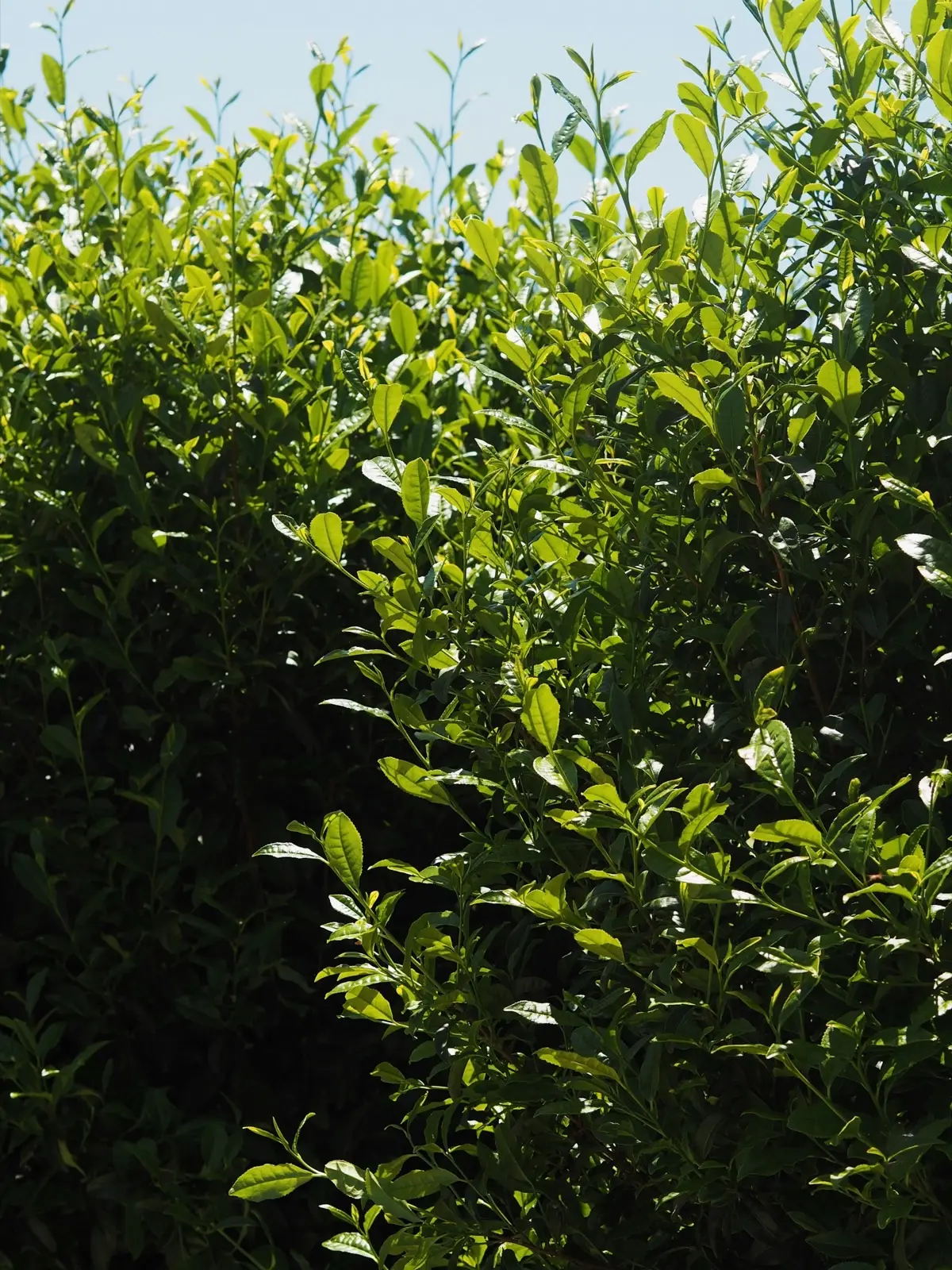
Shading. For roughly three weeks before harvest, the bushes are covered. Light is progressively cut back until very little reaches the leaf. The plant responds by producing more chlorophyll — the jade colour — and by holding on to L-theanine, an amino acid that would otherwise convert into the catechins responsible for bitterness. Shading is the single most expensive decision a producer makes, and it is the one that most cheap matcha skips.
Steaming and drying. Japanese green tea is steamed rather than pan-fired, within hours of picking, which stops oxidation and locks the colour in. The leaves are then dried and their stems and veins removed. What is left is called tencha — matcha before grinding.
Grinding. Traditionally on granite mills that turn slowly enough to produce around 30–40 grams an hour. Slow because heat is the enemy: grind too fast and you cook off the aroma you spent three weeks of shading to create. Industrial ball mills are far quicker and produce a coarser, duller powder that tastes flatter and clumps more.
Where it comes from
Almost all of it is Japanese, and most Japanese matcha comes from a short list of places: Uji in Kyoto Prefecture, Nishio in Aichi, Yame in Fukuoka, and Kagoshima in the south. Those regions differ in climate, in cultivar and in house style, and a tin that names one is telling you considerably more than a tin that says only “product of Japan”.
Uji is the historic centre and the most expensive name on a label — what that name does and does not guarantee is set out in the Uji origin page. China grows real matcha too, some of it perfectly good. The problem is never that Chinese matcha exists; it is that it is often sold at Japanese prices with the country of origin left off.
Two ways to drink it
Usucha, thin tea, is the one nearly everyone means: about 2 g of powder whisked into 60 ml of water at roughly 80 °C, drunk from a bowl, with a layer of fine foam on top. It is also the preparation that exposes a matcha most completely, which is why every tin on this site is judged that way.
Koicha, thick tea, doubles or triples the powder into the same water and is kneaded rather than whisked into something closer to paint. It is only made with the best first-harvest leaf, because at that concentration a mediocre powder is undrinkable. If a tin does not say it is suitable for koicha, it probably is not.
Everything else — lattes, iced drinks, baking — is a third category, and it wants a different powder. The latte method explains why milk changes what you should buy.
What good matcha tastes like
Sweet before it is bitter. There should be a thick, almost savoury quality — umami is the usual word, and for once it is the right one — followed by a clean finish with no dry scrape at the back of the throat.
Bitterness on its own is not a defect; a good usucha has an edge. Bitterness without the sweetness underneath it is the signature of late-harvest leaf, and no amount of careful whisking rescues it.
What the colour tells you
Dry powder should be a vivid, slightly yellow-toned jade. Compare tins against a white surface in daylight and the differences are obvious in a way they never are through a website photograph.
Dull green means late harvest or poor shading. Yellow-brown or khaki means old — matcha oxidises quickly once ground, and it goes on oxidising in a sealed tin, just more slowly. A brown-tinged powder was probably ground many months ago, whatever the best-before date says.
Why it does not keep
Whole leaf tea is stable for years. Matcha is not, and the reason is the same reason it tastes the way it does: grinding exposes an enormous surface area to oxygen, and oxidation starts immediately. A sealed tin slows it down. Nothing stops it.
Plan on four to six weeks of good drinking after opening a tin, and buy sizes to match rather than buying in bulk to save money. What actually happens to matcha over time covers the chemistry and what refrigeration is worth.
Caffeine, briefly
Because you swallow the leaf, matcha carries more caffeine per gram than a steeped green tea. Per serving it is a different story: a 2 g bowl lands somewhere near 38–89 mg, which is usually less than a cup of coffee rather than more. The full arithmetic, and what the theanine research does and does not support, is in matcha against coffee.
Grades, and why the labels mean less than you think
“Ceremonial” and “culinary” are not regulated terms. No Japanese authority defines them, and no producer in Japan is required to earn them. They are marketing language that Western sellers adopted because Western buyers needed a shorthand, and any seller can print either word on any tin.
That does not make them useless — most reputable sellers use them roughly consistently — but it does mean the word on the front is a claim, not a fact. What the grades actually mean goes through what to check instead.
What to do with this
If you are drinking matcha straight — whisked with water, no milk — the difference between a good tin and a mediocre one is the entire experience, and it is worth paying for. If it is going into a latte with oat milk and a spoon of syrup, most of what you paid for is being covered up, and a good culinary grade is the smarter buy.
Our ranked buying guide splits along exactly that line, with prices per gram in CAD.