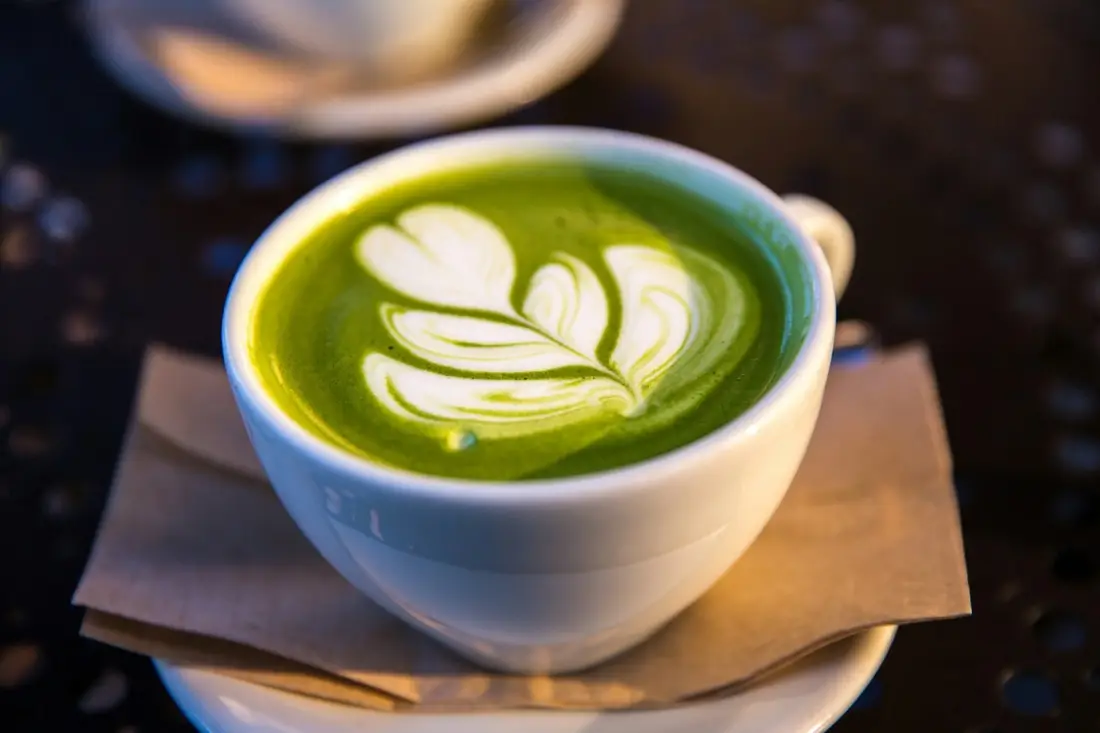
Why the temperature matters so much
Matcha is drunk whole, so anything the heat damages goes straight into the cup with nowhere to hide. Water off the boil scorches the powder and pushes the catechins forward, which is exactly the harsh, drying bitterness people blame on their matcha.
Around 80 °C is the target. Boil, then wait two minutes — no thermometer needed.
Whisk the paste first, then add milk
Whisking matcha directly into milk is the second most common mistake. Milk is too viscous to break the clumps apart, so you end up with pockets of dry powder that dissolve in the mouth as bitter grit.
Make a smooth paste with a small amount of hot water first. Everything after that is just pouring.
Which milk works, and why oat usually wins
Oat milk is the default in cafés for a practical reason rather than a fashionable one: it is thick, mildly sweet, and low enough in protein that it does not fight the tea. Dairy works well and mutes the matcha slightly more — milk proteins bind the astringent compounds, which softens the drink and also flattens it.
Soy is the awkward one. It curdles readily against anything acidic and hot, and matcha whisked at 80 °C is warm enough to catch it. Pour the milk into the tea rather than the tea into the milk, and keep the milk below about 65 °C.
Almond milk is thin and its own flavour competes. If it is what you have, use slightly more matcha to hold the line.
How much to use, and the ratio that matters
Two grams is the reference for one drink, and it stays two grams whether you are making a small latte or a large one. What changes is the milk, not the paste. People who scale everything up end up at four grams of matcha under 400 ml of milk and wonder why it is harsh: the water-to-powder ratio in the paste is what governs bitterness, and it should not move.
Weigh it once with a kitchen scale to see what two grams looks like in your own spoon. A “teaspoon” of matcha ranges from about 1.5 g scooped loosely to 3 g packed, which is a 100% error hiding in a common instruction.
If the result is still harsh after that, the cause is one of four things and three of them are fixable in the next bowl — why your matcha tastes bitter works through them in order.
Iced version
Same paste, then pour over a full glass of ice and cold milk rather than hot. Whisk the paste with slightly less water — around 40 ml — because melting ice will dilute it further.
Which powder to use
This recipe is written for culinary or latte grade, and that is not a compromise — it is the right tool. If you want to taste the matcha rather than the milk, drink it straight instead, and buy accordingly from the buying guide.