Start by working out which bitterness you have
Bitterness in matcha is not a single fault. It arrives from four separate places, and three of them are in your kitchen.
The quick test takes one bowl. Sift 2 g of powder, whisk it into 60 ml of water at about 80 °C, and taste it immediately. If that bowl is pleasant, your technique was the problem and you have already fixed it. If that bowl is still harsh, the powder is the problem and nothing you do at the counter will change it.
Everything below is the explanation of why that test works.
Cause one: the water was too hot
This is the most common single mistake, and it is the easiest to correct.
The compounds responsible for bitterness and astringency in tea are the catechins, and how much of them ends up in the cup depends on temperature. A 2025 study of Longjing green tea using sensory panels found bitterness and astringency scores rose by about 33% and 37% respectively as brewing moved from 70 °C to 100 °C, while umami went the other way. That was a steeped tea rather than a whisked suspension, so treat the numbers as direction rather than as a measurement of your bowl — but the direction is not in dispute, and it matches what every Japanese preparation guide has said for a century.
The fix: boil the kettle, then wait two minutes before pouring. That drops a full kettle to roughly 80 °C in a normal kitchen. No thermometer required.
If you want the tea sweeter still, go cooler — 70 °C makes a noticeably rounder, quieter bowl. Below about 60 °C the powder stops suspending properly and the texture goes thin.
Cause two: too much powder for the water
The matcha to water ratio is the second lever, and people overshoot it constantly — usually because a “teaspoon” of matcha can be anything from 1.5 g loosely scooped to 3 g packed.
For a bowl drunk straight, 2 g to 60 ml is the reference. That is the ratio in our tasting protocol, and it exists so that every tin is judged at the same strength rather than at whatever strength flatters it.
Going to 3 g in the same 60 ml does not make the tea half again as strong. It makes it disproportionately harsher, because bitterness rises faster than concentration does. If a bowl is too intense, take powder out before you add water.
For a latte the ratio changes shape rather than value: keep the 2 g paste, whisk it in 60 ml of water, and put the milk on top. Whisking matcha directly into milk is a separate mistake, covered in the latte recipe.
Cause three: you did not sift, so the bowl is clumpy
Matcha comes out of the tin already lumpy. It is ground finer than flour, it picks up static, and it draws moisture out of the air, so it packs itself into small hard beads.
A whisk does not break those beads apart. It moves them around. They survive into the mouth and dissolve there, one at a time, as concentrated pockets of dry powder — which is exactly the sharp, gritty bitterness people describe as “my matcha tastes like it has bits in it.”
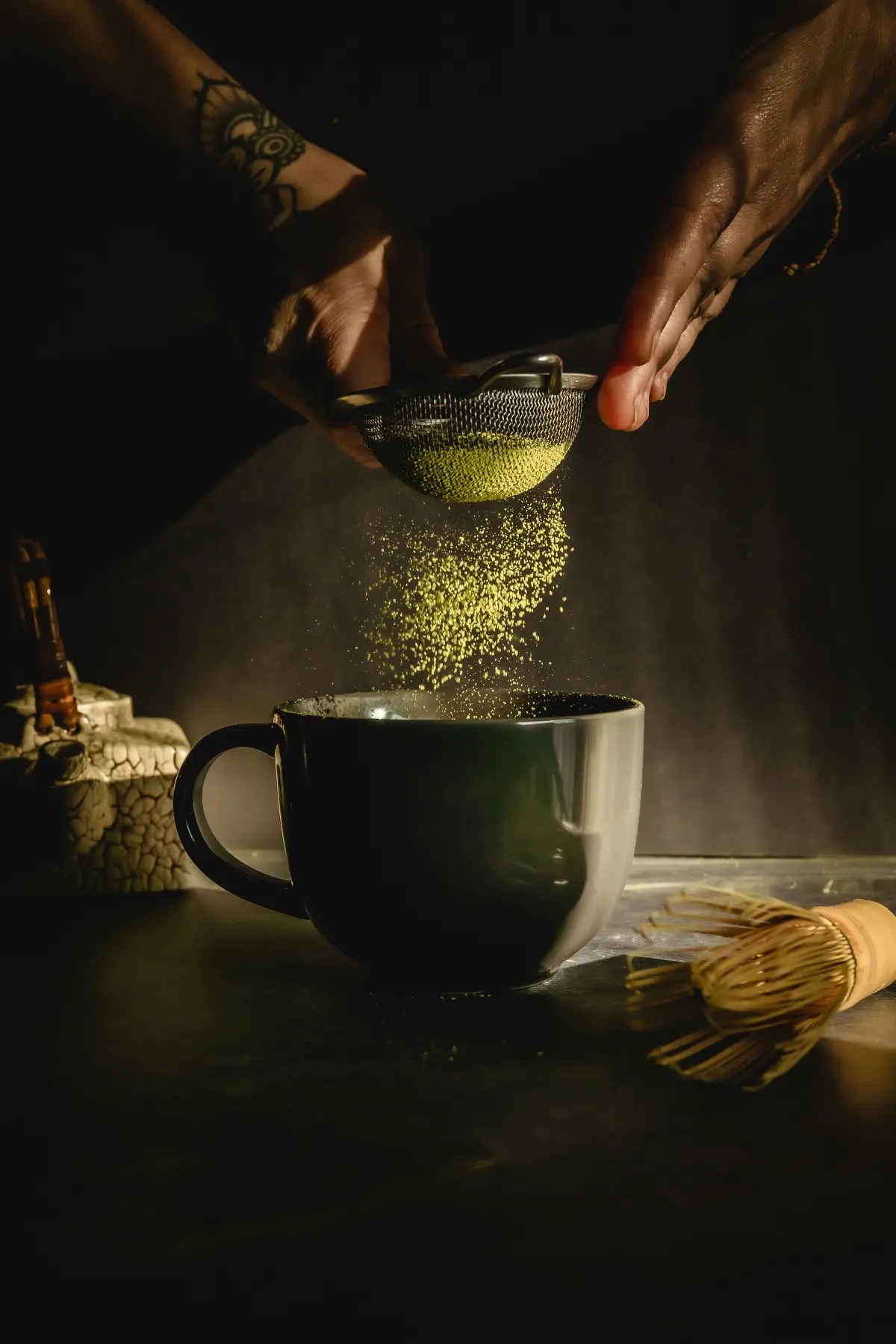
Push the powder through a fine tea strainer with the back of a spoon before adding any water. It takes fifteen seconds and it is the highest-return habit in the whole process. A clumpy bowl is always a skipped sift.
Cause four: the powder, which you cannot fix
If the reference bowl is still harsh, the problem arrived with the tin, and it is one of three things.
Late-harvest leaf. Sweetness in matcha comes from shading and from the spring flush. Later harvests, or bushes shaded briefly to save money, produce leaf that is bitter without the sweetness underneath it. This is the single most common reason cheap “ceremonial” matcha disappoints, and the grades guide explains why the word on the tin does not protect you.
Powdered sencha sold as matcha. Legal, common, and much cheaper to make. It reads as aggressively grassy and thin, with a dry scrape at the finish. How to spot fake matcha covers what to check on a listing before you buy.
Age. Matcha oxidises from the moment it is ground and keeps going in a sealed tin. Old powder turns dull, then khaki, and develops a flat marine note people describe as fishy. If your tin has been open since spring, read does matcha go bad before blaming your whisk.
The order to try things in
To make matcha less bitter, change one thing at a time and in this order. Each step is cheaper than the one after it.
- Sift the powder. Fifteen seconds, fixes grit and most clumping.
- Wait two minutes after the boil. Fixes harshness.
- Weigh 2 g rather than scooping. Fixes over-concentration.
- Look at the dry powder against something white in daylight. Vivid jade is fresh and well grown; dull olive or khaki is not.
If steps one to three change nothing and step four looks wrong, buy a different tin. That is not a failure of technique, and no amount of careful whisking rescues leaf that was picked late. What to buy instead, priced per gram in Canadian dollars, is in the buying guide.