The number that explains the rest
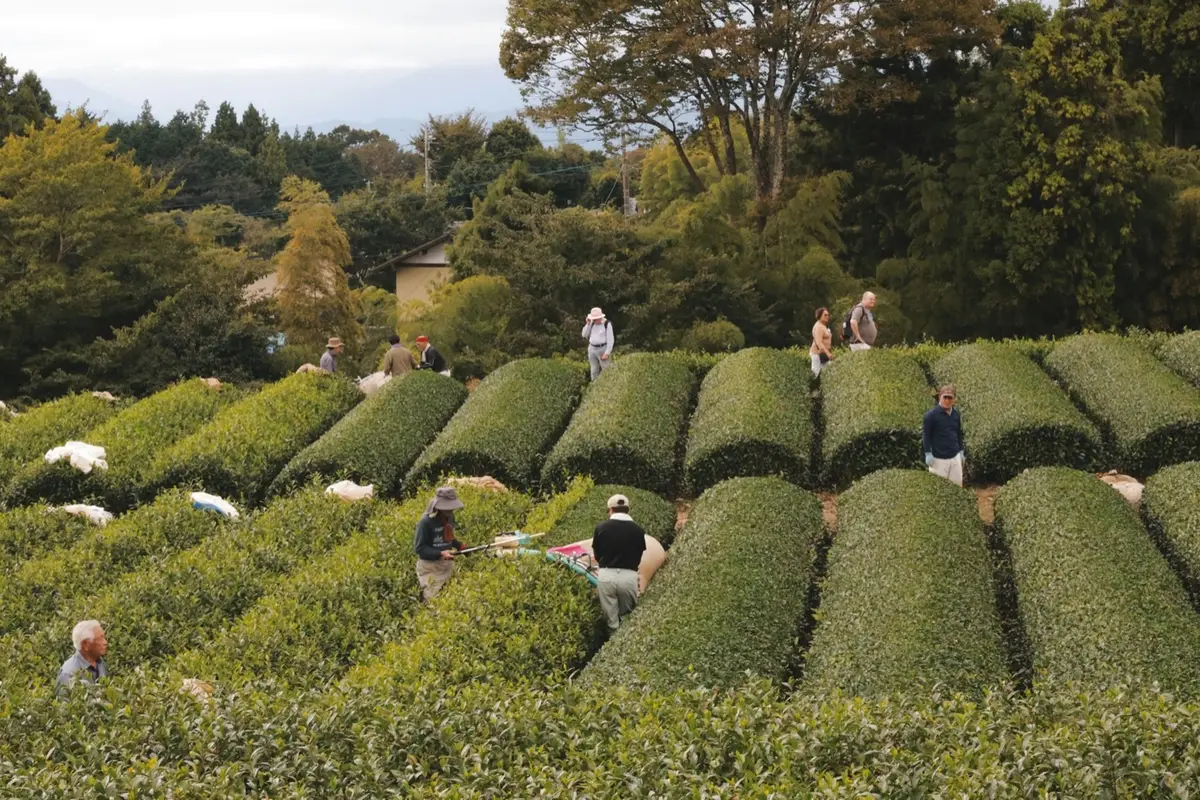
Matcha is milled from tencha — shaded leaf, steamed, dried, and stripped of its stems and veins. Tencha is what actually costs money, and in Japan it is sold at prefectural auction, so there is a public price.
Kyoto’s 2026 first-flush auctions, reported by the Kyoto Prefectural Tea Industry Council and the Zen-Noh Kyoto tea market, closed like this:
| 2026 Kyoto first flush | Average price | Change on 2025 | Volume traded |
|---|---|---|---|
| Hand-picked Uji tencha | ¥52,086 / kg | +20.2% | 9,130 kg (+48.7%) |
| Machine-harvested tencha | ¥17,797 / kg | +22.4% | 541,771 kg (+24.7%) |
| Gyokuro | ¥14,249 / kg | +69% | — |
| Kabusecha | ¥8,369 / kg | +82% | — |
| Sencha | ¥6,657 / kg | +48% | — |
Two things in that table matter more than the headline.
The first is where the machine-harvested figure came from. The same category averaged ¥5,402 a kilogram in 2024 and ¥14,541 in 2025 — a rise of about 169% in one year, according to figures the Global Japanese Tea Association compiled from Japan’s agriculture ministry. The 22.4% added in 2026 is a smaller step on top of an already tripled base. Nothing has come back down.
The second is the volume column. Kyoto traded 24.7% more machine-harvested tencha in 2026 than in 2025, and 48.7% more hand-picked Uji tencha. Supply rose sharply — and the price still went up. That is the clearest available evidence that this is demand outrunning production rather than a bad harvest.
Figures checked on 14 August 2026. Auction prices move every spring; if you are reading this a year from now, treat the numbers as history.
Why more planting did not fix it
Tea is a perennial crop with a very slow response time, and matcha adds three more bottlenecks on top of that.
The bushes. A newly planted tea field takes roughly five years to reach full production. A grower who decided in 2025 to chase matcha money is harvesting properly in 2030.
The shade. Tencha requires the bushes to be covered for about three weeks before picking, which means physical structures, labour, and a decision made weeks before anyone knows what the price will be. It is the most expensive choice a producer makes and it is made blind.
The mill. Granite mills grind on the order of tens of grams an hour. You cannot buy your way past that constraint without changing the product — faster industrial grinding runs hotter and produces a coarser, duller powder, which is one of the things the grades guide tells you to watch for.
Behind all three is the demographic problem. The average Japanese tea farmer is around 65, and the number of producers has been falling for two decades. Fields leaving production do not care what the auction cleared at.
The knock-on nobody advertises
Look again at the sencha and gyokuro rows. Those teas are not fashionable, and they got 48% and 69% more expensive in one year.
That is the shortage’s second act. Growers who can switch a field to tencha are switching it, because tencha pays better — in 2026 tencha made up roughly 77% of the first-flush volume traded across Kyoto’s seven categories. Every field that moves is a field no longer making sencha. The matcha boom is quietly repricing ordinary Japanese green tea for people who never drank matcha.
It is also, predictably, repricing fraud. When real tencha costs ¥17,797 a kilogram wholesale, the incentive to grind cheap late-harvest leaf, or Chinese green tea, and print “ceremonial” on the tin is larger than it has ever been. How to spot fake matcha is more useful this year than last.
What this means for what you pay
A retail tin price is the raw leaf plus milling, packaging, shipping, and every margin in between, so it does not track the auction one for one. But the auction is a floor, and the floor tripled.
The practical consequence is that per-gram arithmetic matters more than it used to. Divide the landed cost of the tin — including shipping and any tax — by the grams inside it, and compare on that number and nothing else. Sticker prices across 20 g, 30 g, 40 g and 100 g packages are close to meaningless.
Then apply one piece of scepticism. In a year when Kyoto tencha cleared these prices, a large bag of “ceremonial grade” matcha at a very low price per gram is telling you something. Either it is not first-flush tencha, or it is not from where it says, or it was ground a long time ago — and stale powder is the cheapest of the three to produce.
Is the expensive tin worth it?
It depends entirely on what you do with it, and the answer splits cleanly.
Drunk plain in water, matcha has nothing to hide behind, and the gap between a careful first-flush tin and a cheap one is the entire experience. That is worth paying for, and it is the case where the Uji name and the harvest date earn their premium.
Under steamed milk and syrup, most of what the premium bought is covered up. A good culinary grade at roughly half the price per gram makes a better latte and leaves the money in your pocket. Buying one tin of each is not a compromise — it is what the arithmetic actually recommends, and it roughly halves the annual cost of drinking matcha.
Where to buy either in Canada without paying twice for shipping is in where to buy real matcha in Canada, and the shortlist we are working through is in the buying guide.